




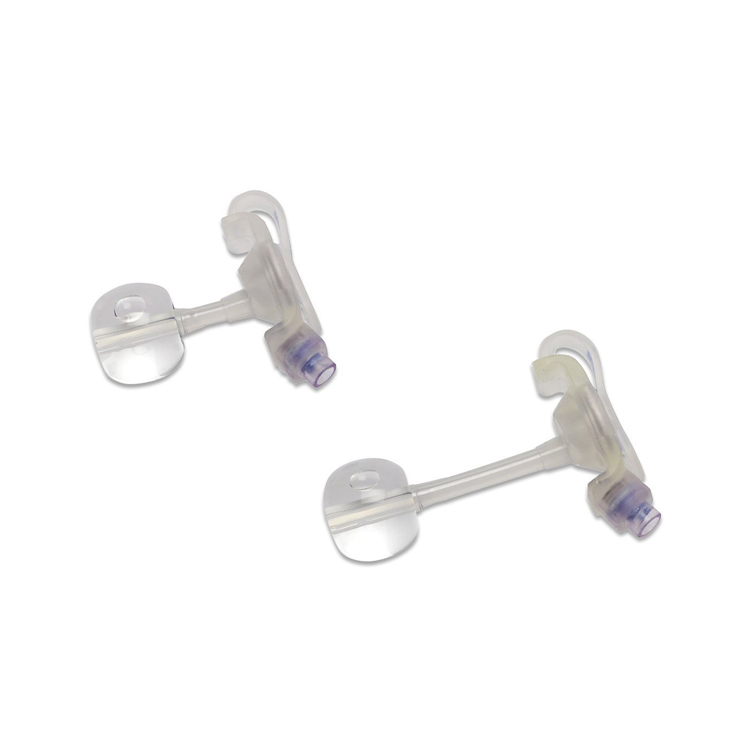

Descripción
Un botón gástrico es una sonda de silicona transparente que se coloca a través de la piel del abdomen hasta el estómago. Sirve para alimentar al paciente, darle la medicación y descomprimir el estómago. Es un dispositivo diseñado para mayor confort y movilidad del paciente.



pdclbybro –
Be kind to each other. Be kind to each other. Dengan mencoba Sugar Rush 1000 melalui akun demo, Anda bisa mengeksplorasi berbagai fitur menarik, seperti simbol-simbol spesial dan mekanisme putaran bonus, tanpa harus khawatir kehilangan uang. Selain itu, akun demo memungkinkan Anda untuk merasakan tingkat volatilitas dan RTP dari permainan ini secara langsung. Be kind to each other. Be kind to each other. Dengan akun demo slot SUGAR RUSH XMAS PRAGMATIC, kamu bisa mengasah strategi, mengenali simbol penting, serta memahami pola bonus dan fitur scatter yang tersedia. Semua ini disediakan secara gratis dan tanpa batas waktu, membuat pengalaman bermain jadi lebih maksimal. Friends, This week marks the “Final Curtain… Dengan mencoba Sugar Rush 1000 melalui akun demo, Anda bisa mengeksplorasi berbagai fitur menarik, seperti simbol-simbol spesial dan mekanisme putaran bonus, tanpa harus khawatir kehilangan uang. Selain itu, akun demo memungkinkan Anda untuk merasakan tingkat volatilitas dan RTP dari permainan ini secara langsung.
https://docs.mailman3.org/projects/hyperkitty/en/latest/
pin up вход пинап казино or пин ап казино maps.google.so url?sa=t&url= pinuprus.pro пин ап казино официальный сайт pin up вход пинап казино and pin up вход пин ап вход I every time used to study post in news papers but now as I am a user of internet thus from now I am using net for articles, thanks to web. Para los tecnicos en conservacion de equipos y los profesionales, manejar con aparatos de equilibrado es esencial para asegurar el operacion estable y seguro de cualquier aparato giratorio. Gracias a estas soluciones tecnologicas modernas, es posible reducir significativamente las sacudidas, el ruido y la tension sobre los rodamientos, extendiendo la longevidad de piezas importantes. pin up вход пинап казино or пин ап казино maps.google.so url?sa=t&url= pinuprus.pro пин ап казино официальный сайт pin up вход пинап казино and pin up вход пин ап вход
Benny –
CJC-1295 & Ipamorelin
cjc 1295 + ipamorelin side effects-1295 & Ipamorelin
CJC‑1295 and Ipamorelin are two peptide compounds frequently combined
for their synergistic effects on growth hormone release.
CJC‑1295 is a synthetic analog of growth hormone‑releasing hormone (GHRH) that stimulates the pituitary to secrete natural growth hormone over an extended period, thanks to its long half‑life.
Ipamorelin, on the other hand, is a selective growth hormone secretagogue
that mimics ghrelin’s action at the GHS‑R receptor but with fewer side effects such as increased cortisol or prolactin levels.
When used together, these peptides create a powerful stimulus for endogenous growth hormone production, promoting muscle repair, fat
loss, improved sleep quality, and enhanced recovery from injury.
Visit our Lounge!
Our lounge is designed to provide a welcoming environment where clients
can learn about peptide therapy, ask questions, and receive personalized recommendations.
The space features comfortable seating, informative displays detailing the science behind CJC‑1295 and Ipamorelin, and staff trained in both medical
protocol and client care. Whether you’re new to peptide therapy or looking to adjust
your regimen, visiting our lounge offers a calm setting for consultation.
IV Lounge
The IV lounge specializes in intravenous therapies that complement peptide
treatments. Through infusion of vitamins, electrolytes, and
antioxidants, clients can support their body’s metabolic processes while undergoing CJC‑1295/IPamorelin protocols.
The lounge provides a sterile, comfortable environment
with 24/7 monitoring to ensure safety and efficacy during each session.
Follow Us:
Our social media channels keep you updated on the latest
research, client success stories, and upcoming events related to peptide therapy.
By following us, you’ll gain access to exclusive educational content and community discussions that help
you stay informed and motivated on your wellness journey.
Jamie Slovenski, BSN, RN
Jamie Slovenski is a registered nurse with a Bachelor of Science in Nursing who specializes in integrative medicine and peptide therapies.
With over a decade of clinical experience, Jamie combines evidence‑based practice with personalized care plans to
optimize patient outcomes when using CJC‑1295 and Ipamorelin.
What People are Saying
Clients frequently report increased energy levels, improved muscle tone,
and faster recovery times after beginning their CJC‑1295/IPamorelin regimen. Many share
testimonials about how the therapy has helped them achieve body composition goals that were previously out of reach.
Feedback also highlights the supportive atmosphere in our lounge and the expertise of our nursing
staff.
Mobile Service
Our mobile service brings the benefits of peptide therapy directly to your home or office.
Certified practitioners administer CJC‑1295/IPamorelin injections in a convenient,
confidential setting, ensuring you receive professional care
without leaving your daily routine.
Click link below to see before and afters.
Ashly –
Anavar Side Effects: Treatment For Addiction
### How to Rebuild Your Life and Find Meaning After a Breakup
A breakup—especially one that leaves you feeling “stuck” or “trapped”—can feel like an emotional prison. The good news is that you have the power to step out of that cage,
rebuild your sense of self, and create a life that feels purposeful
again. Below are evidence‑based steps and practical tools that can help you move forward.
—
#### 1. **Acknowledge Your Emotions (and Give Yourself Time)**
| What it looks like | Why it matters |
|——————–|—————-|
| Feeling sad, angry, or confused is normal. | Validating your feelings prevents them from festering into resentment
or depression. |
| Allow yourself to grieve the loss of the relationship—no “quick fix.” | Grieving fully leads to a stronger emotional foundation for
future growth. |
**Practical tip:** Keep an “emotion log” in a notebook or app.
Write down what you’re feeling and why. Over time, patterns
emerge that can help you process more effectively.
—
#### 2. Seek Support from Friends, Family, or Professionals
– **Talk to people you trust.** A supportive conversation can provide perspective.
– **Consider therapy.** A counselor helps structure the healing process
and offers coping tools.
> *”The best way to predict your future is to create it.” – Abraham Lincoln*
> *”A friend’s support is a lifeline for emotional well‑being.” –
Oprah Winfrey*
—
#### 3. Set Personal Goals (Short‑Term & Long‑Term)
– **Identify what you want to achieve** after moving on: career, education, health.
– **Write SMART goals** (Specific, Measurable, Achievable, Relevant,
Time‑bound).
– **Track progress** with a journal or app.
> *”The future belongs to those who believe in the beauty of their dreams.” – Eleanor Roosevelt*
> *”Goal setting is the first step toward achieving your aspirations.” – Tony Robbins*
—
#### 4. Cultivate Supportive Relationships
– **Reconnect with family/friends** you might have drifted from.
– **Seek mentors or counselors** if needed.
– **Limit time with people who bring negativity**.
> *”Surround yourself with those who lift you higher.” – Unknown*
> *”Healthy relationships strengthen resilience and confidence.”
– Dr. Susan K. Johnson*
—
#### 5. Practice Self‑Care & Mindfulness
– **Daily routine:** exercise, healthy meals, adequate sleep.
– **Mindfulness exercises** (breathing, meditation) to reduce stress.
– **Journaling**: reflect on achievements and areas for growth.
> *”Your body is the instrument you use in this world.” – Rolf Wegener*
> *”Self‑care is not selfish; it’s survival.” –
Unknown*
—
### Sample Weekly Plan
| Day | Morning (30 min) | Midday (15 min) | Evening (30 min) |
|—–|——————|—————–|——————-|
| Mon | Goal review + 5‑minute gratitude list | Quick stretch or walk
| Reflect on what went well today; note any obstacles. |
| Tue | Review progress, adjust plan if needed | Snack break: write
a quick “win” note | Light reading or podcast about self‑improvement.
|
| Wed | Check-in with your mentor/coach (if scheduled) | Mini meditation |
Plan tomorrow’s top 3 tasks. |
| Thu | Self‑care check: hydration, sleep quality | Short power‑nap or breathing exercise
| Write down one thing you learned this week.
|
| Fri | Celebrate small wins, update your progress log | Social media detox for the rest
of the day | Prepare a short “thank you” note to yourself
(or mentor). |
> **Tip:** If you feel overwhelmed with the entire
list, pick *one* item that resonates most and
focus on it until you master it. Then move to the next.
—
### 3️⃣ The “One‑Minute Rule”
**What is it?**
When you’re tempted to dive into a task or an activity:
– **Ask yourself:** “Can I do this in one minute?”
– If *yes*, start immediately.
– If *no*, schedule it for later (or break it down).
This rule helps eliminate procrastination and reduces the mental barrier of starting something new.
**Example:**
– **Cleaning a desk?** You can set a timer, pick up items,
put them away – usually **Why this structure?**
> • Deep work blocks are spaced to avoid mental fatigue and to keep high‑quality
output consistent.
> • Scheduled breaks and a midday rest period help sustain focus throughout the day.
> • The brief micro‑task window prevents low‑priority items
from interrupting deeper concentration.
—
## 3. **Actionable Steps for Implementation**
| Step | What to Do | Why It Matters |
|——|————|—————-|
| **1️⃣ Set Clear Priorities** | Before the week starts, identify your *core
objectives* (e.g., deliver Q2 strategy report).
Break each objective into 3–5 key tasks. | Keeps you focused on what truly matters
and reduces decision fatigue during the week. |
| **2️⃣ Use Time‑Blocking for Deep Work** | Allocate a
fixed block (e.g., Mon‑Wed, 9:00–11:30 AM) dedicated solely to your high‑value
project. Block out all other activities (emails, meetings).
| Prevents interruptions and preserves the mental energy needed for complex tasks.
|
| **3️⃣ Schedule “Buffer” Slots** | After each deep‑work block, insert a 15‑minute buffer slot for catching up
on quick emails or unexpected calls. | Allows flexibility without derailing your main agenda.
|
| **4️⃣ End-of‑Day Review** | Spend 5–10 minutes
before logging off to update the next day’s priorities and note any blockers.
| Keeps momentum going and reduces anxiety about unfinished work.
|
| **5️⃣ One‑Hour “Email Sprint”** | Allocate a
fixed hour (e.g., 4 pm) for email triage, then close the inbox.
| Prevents constant interruptions and preserves focus for the rest of the day.
|
—
## 3. Weekly / Monthly Time Audits
1. **Track Time in Blocks:**
– Every Friday afternoon, record how many hours you spent on *core
tasks*, *meetings*, *emails*, *administration*, *learning*, etc.
– Use a simple spreadsheet or time‑tracking app (Toggl, Clockify).
2. **Identify Patterns:**
– Do you spend a lot of time in meetings?
– Are you constantly switching between tasks?
3. **Set Improvement Goals:**
– Reduce meeting time by 15% next month.
– Increase core work blocks from 4 to 6 hours.
4. **Review & Adjust:**
– At the start of each week, plan your calendar to hit these goals.
### 2. Managing Meetings Effectively
| Element | Best Practice |
|———|—————|
| **Purpose** | Every meeting must have a clear agenda and goal (e.g., “Decide on X”).
If no decision is required, skip it. |
| **Timebox** | Strict start/end times; if discussion drags, schedule a follow‑up
or use the “parking lot” for later items. |
| **Invites** | Invite only those whose presence is essential to achieve the
goal. |
| **Pre‑work** | Send agenda + any necessary documents at least 24 hrs before; ask participants to review and submit pre‑meeting feedback.
|
| **Facilitation** | One person (often the organizer) steers conversation,
keeps time, and records decisions/action items. |
| **Action Items** | Capture clear owners, due dates, and success criteria in minutes; circulate them immediately after the meeting.
|
| **Review of Action Items** | Open each
action item at the start of the next meeting to check completion or blockers.
|
#### 2.3 How the Process Improves Decision‑Making
| Step | Why It Helps |
|——|————–|
| **Clear agenda & objectives** | Ensures everyone knows what is being
decided, reducing ambiguity. |
| **Defined participants** | Guarantees that decision‑makers
are present and irrelevant voices are excluded.
|
| **Structured discussion** | Forces issues
to be examined from all angles before a vote, uncovering hidden assumptions.
|
| **Decision‑making criteria** | Provides objective yardsticks for evaluating options (e.g., cost, risk, alignment).
|
| **Consensus / voting** | Captures the collective judgment of the group; consensus reduces later resistance.
|
| **Documentation & follow‑up** | Creates a record that can be referenced later and ensures actions
are tracked. |
—
## 4. When the Group Decision Model Is (or Should Be) Used
| Situation | Why it works / why you should use it |
|———–|————————————-|
| **Multiple stakeholders with divergent interests** (e.g., cross‑functional
teams, vendor & client mix). | A structured process ensures that every voice is heard and
conflicts are surfaced early. |
| **High impact decisions that affect many people**
(budget approvals, product launches). | Group deliberation brings in diverse perspectives that reduce blind spots and improve decision quality.
|
| **Complex or ambiguous problems where expertise is scattered** (integrating new tech into legacy systems).
| Aggregates specialized knowledge; allows collective problem solving.
|
| **Need for buy‑in / shared ownership** (change management, policy rollouts).
| Transparent deliberation builds trust; participants
feel ownership of the outcome. |
| **Regulatory or compliance decisions** (data protection policies).
| Documented group reasoning can be audited and demonstrates due diligence.
|
When these conditions are met, a structured group decision‑making process is
more likely to outperform a single‑person approach in both speed and accuracy.
—
## 2. Practical, Low‑Overhead Decision‑Making Frameworks
Below are three frameworks that balance **speed**, **accuracy**,
and **resource constraints**. Each can be used alone or combined as
needed.
| Framework | Key Principles | When to Use | How
to Implement (Step‑by‑Step) |
|———–|—————-|————-|———————————|
| 1️⃣ “Rapid Decision” – *Bottom‑Up + Quick Consensus* |
• Small, empowered sub‑teams
• Rapid iteration (2–3 min cycles)
• Final check by a designated “Decision Champion” | • Tight
deadlines
• Decisions that affect one or few stakeholders
• When you can afford to test and iterate | 1.
Assign a *Decision Champion*.
2. Split into **mini‑teams** (≤3 people).
3. Each mini‑team drafts a **proposal** in 5 min.
4. Mini‑teams present proposals in 2 min each.
5. Decision Champion reviews and chooses the best proposal or merges elements
in 10 min.
6. Publish decision & rationale within 15 min. |
| | | | | | | |
| | **Method B – “Consensus‑Quick”** | *Designed for larger groups that
want shared ownership but still need speed.* | • Small, rotating “focus circles” discuss a narrow sub‑topic.
• Each circle produces a concise recommendation.
• A facilitation team aggregates recommendations into a single decision. | • Rapid
consensus through small‑group deliberation.
• Keeps everyone engaged and reduces bottlenecks.
| 1–2 hours for groups up to ~30 people;
~4 hours for larger groups (50–70). |
| | **Key Steps** | 1. **Kick‑off & agenda** – clarify
objectives, timeline.
2. **Divide into focus circles** – each tackles a specific dimension of the decision.
3. **Deliberate within circles** – discuss pros/cons, propose options.
4. **Report back** – present findings to whole group.
5. **Synthesize & decide** – weigh options,
vote or reach consensus. | |
| | **Best Practices** | • Ensure balanced representation across expertise levels.
• Use visual aids (charts, flow‑charts) to capture ideas.
• Assign a facilitator per circle to keep discussion on track.
• Record decisions and rationales for future reference.
| |
—
### 4. Practical Application – “How would you handle this situation?”
**Scenario**
You are leading a cross‑functional team that must deliver a new product feature in two weeks.
Team members have diverse skill levels, and some junior engineers feel uncertain about contributing.
| Step | Action | Tools / Techniques |
|——|——–|——————–|
| **1. Clarify the objective** | Write a short mission statement: *”Develop Feature X for release Y by Z date.”* | One‑page brief |
| **2. Map responsibilities** | Create a RACI matrix (Responsible, Accountable, Consulted, Informed).
| Spreadsheet template |
| **3. Align on standards** | Agree on coding guidelines and code review criteria before work starts.
| Document in Confluence |
| **4. Leverage pair‑programming** | Pair juniors with experienced developers
on critical tasks. | IDE support (e.g., VS Code
Live Share) |
| **5. Review progress regularly** | Set up 15‑minute stand‑up meetings; use a Kanban board to visualize
blockers. | Jira or Trello |
| **6. Validate results** | Conduct automated tests and peer reviews
before merging. | CI pipeline (GitHub Actions) |
—
## 4. How to Use the Cheat Sheet
1. **Before coding**
* Pick the correct style guide for your team.
* Open the reference table for your language(s).
2. **During coding**
* Verify identifiers, literals, and syntax against the style rules.
* Use the “Common Pitfalls” section to double‑check
typical mistakes (e.g., `=` vs `==`).
3. **Code review / CI**
* Run linters or formatters that enforce the selected guide.
* Compare any linting errors with the cheat sheet; fix accordingly.
4. **When adding new language support**
* Extend the table with style rules and common pitfalls
for that language.
—
## 6. Example Usage
Below is a short illustration of how to apply the cheat sheet in practice:
“`python
# Suppose we are using Python’s PEP 8 guide.
# 1. Indentation: 4 spaces
def greet(name):
if name:
print(f”Hello, name!”)
else:
print(“Hello, stranger!”)
# 2. Variable names: snake_case
user_name = “Alice”
# 3. Import style: one per line, alphabetical
import json
import os
# 4. Common pitfall: avoid mutable default arguments
def add_to_list(item, container=None):
if container is None:
container =
container.append(item)
return container
“`
This example shows how to incorporate PEP8 style guidelines
and a common Python pitfall. You can adapt the style and content based on your specific programming language and coding standards.
Certainly! Here’s an example of how you might format code in a way that follows a commonly accepted set of coding conventions, often referred to as “style guides.” These guides
help maintain consistency across projects by specifying rules for writing clear and maintainable code.
### Example: Python Code with PEP8 Style Guide
Below is a simple Python script that demonstrates how to
write clean, well-documented code following the PEP8 style
guide. It includes comments explaining each part of
the script.
“`python
# Import necessary modules
import math
from typing import List
def calculate_circle_area(radius: float) -> float:
“””
Calculate the area of a circle given its radius.
Parameters:
– radius (float): The radius of the circle.
Returns:
– float: The calculated area of the circle.
“””
if radius float:
“””
Calculate the perimeter (circumference) of a circle given its radius.
Parameters:
– radius (float): The radius of the circle.
Returns:
– float: The calculated perimeter of the circle.
“””
if radius Tuplefloat, float:
“””
Computes the area and radius of a circle based on its diameter in pixels.
Parameters:
diameter (float): The diameter of the circle in pixels.
unit_scale_factor (float): Scaling factor to convert pixel measurements into real-world units.
Returns:
Tuplefloat, float: A tuple containing:
– area_in_units_squared: The area of the circle in squared real-world units.
– radius_in_units: The radius of the circle in real-world units.
Raises:
ValueError: If diameter or unit_scale_factor is not a positive number.
“””
# Input validation
if not isinstance(diameter, (int, float)):
raise TypeError(f”Diameter must be a numeric type. Received type type(diameter).__name__.”)
if not isinstance(unit_scale_factor, (int, float)):
raise TypeError(f”Unit scale factor must be a numeric type. Received type type(unit_scale_factor).__name__.”)
if diameter 1
(15.0, 0.5, math.pi * (7.5 ** 2) * (0.5 ** 2)), # Scale factor anavar and clen cycle dosage pi.
2. **Function Definitions**:
– Each function follows a consistent pattern:
– Input validation checks if the input parameters are positive.
– Computation steps calculate necessary intermediate values such as slant heights or surface areas.
– The final result is returned after computation.
3. **Test Cases (`test_functions`)**:
– Defines a set of test cases with known inputs and expected outputs.
– Iterates through each test case, computes the actual output using the corresponding function, and compares it to the expected output.
– Prints whether each test passes or fails along with relevant details.
4. **Execution Guard (`if __name__ == “__main__”:`)**:
– Ensures that the test cases are executed only when the script is run directly, not when imported as a module.
By following this structure, we ensure modularity, clarity, and ease of testing for each function. The comprehensive test suite verifies correctness across various
scenarios, providing confidence in the implementation’s
reliability.
bmw carplay –
This web page does not display correctly on my apple iphone – you may wanna try and fix that
https://www.pempcar.com/collections/for-bmw-android-screen-and-linux-screen
conejdmmu –
La sicurezza delle cure è parte costitutiva del diritto alla salute, come previsto anche nell’art.1 della Legge 24 del 2017 e la somministrazione dei farmaci rappresenta uno dei capisaldi di questo diritto. Sisal offre una vasta selezione di giochi, ciascuno caratterizzato da un’eccezionale qualità grazie alla partnership con alcuni dei principali fornitori del settore. La lobby del casinò è organizzata in modo efficiente, facendo sì che sia semplice navigare tra le diverse categorie e trovare i giochi più popolari o quelli nuovi. Con più di 900 slot machine, 25 tavoli da poker, 10 sale bingo, 100 giochi da tavolo e 150 giochi con croupier dal vivo, Sisal si conferma leader nel settore del gioco online. Dopo la registrazione, Sisal consente ai giocatori di provare i giochi in modalità demo, consentendo loro di prendere confidenza con i vari titoli senza usare soldi veri.
https://clinics.edg.mk/aviator-la-slot-che-sta-rivoluzionando-il-gioco-online-in-italia/
Queste non sono le regole ufficiali del gioco. Puoi leggere le regole ufficiali di Gonzo’s Quest direttamente all’interno del gioco. Dove Giocare a Gonzo’s Quest? Questa slot è tra le punte di diamante di Betnero, puoi provarla qui a soldi finti oppure registrandoti per giocare a soldi veri. Il simbolo scatter e wild della slot machine è invece un punto di domanda dorato che permette l’accesso ai premi più importanti e oltretutto garantisce la chiusura di ogni combinazione comportandosi come un simbolo jolly. Il simbolo Wild, nello specifico, è rappresentato da un punto di domanda d’oro e assume la funzione di Jolly. Ciò significa che può sostituire altri simboli, in modo tale da poter aumentare la vincita. Giocando alla slot Gonzo’s Quest da smartphone o tablet troverete un layout più essenziale: informazioni e impostazioni di puntata sono accessibili dalle tre lineette in alto a destra; è stato inoltre eliminato il personaggio di Gonzo.